Able Carry
An e-commerce with an emphasis on quality
Able Carry is a Hong Kong-based company that delivers functional and durable personal products, including backpacks, slings, and pouches. Every product is crafted with precision to ensure the highest quality.
We designed an e-commerce website that accentuates the brand's visual identity and enhances the user experience by building comprehensive content components and structures to help users make informed purchase decisions.
Team
The Able Carry project was led by Jimmy K.K. Lam of Studio Earth on consultation, project management, user experience, and interface design, with Judy Chen of Able Carry on visual identity design, and Will Wong on development.
Able Carry
Enrique Batalla, Jeffery Leong, Judy Chen, and Julian Chow
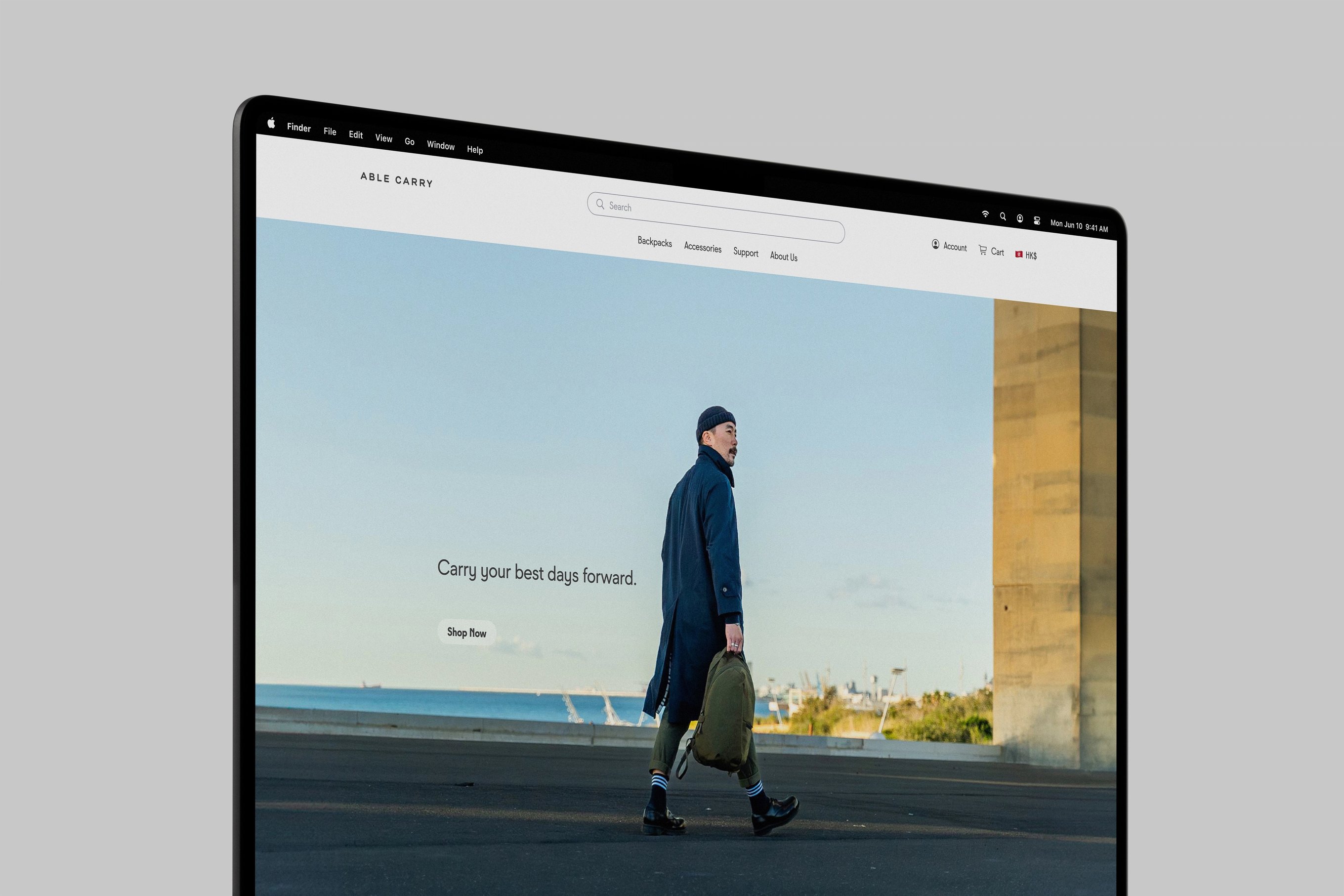
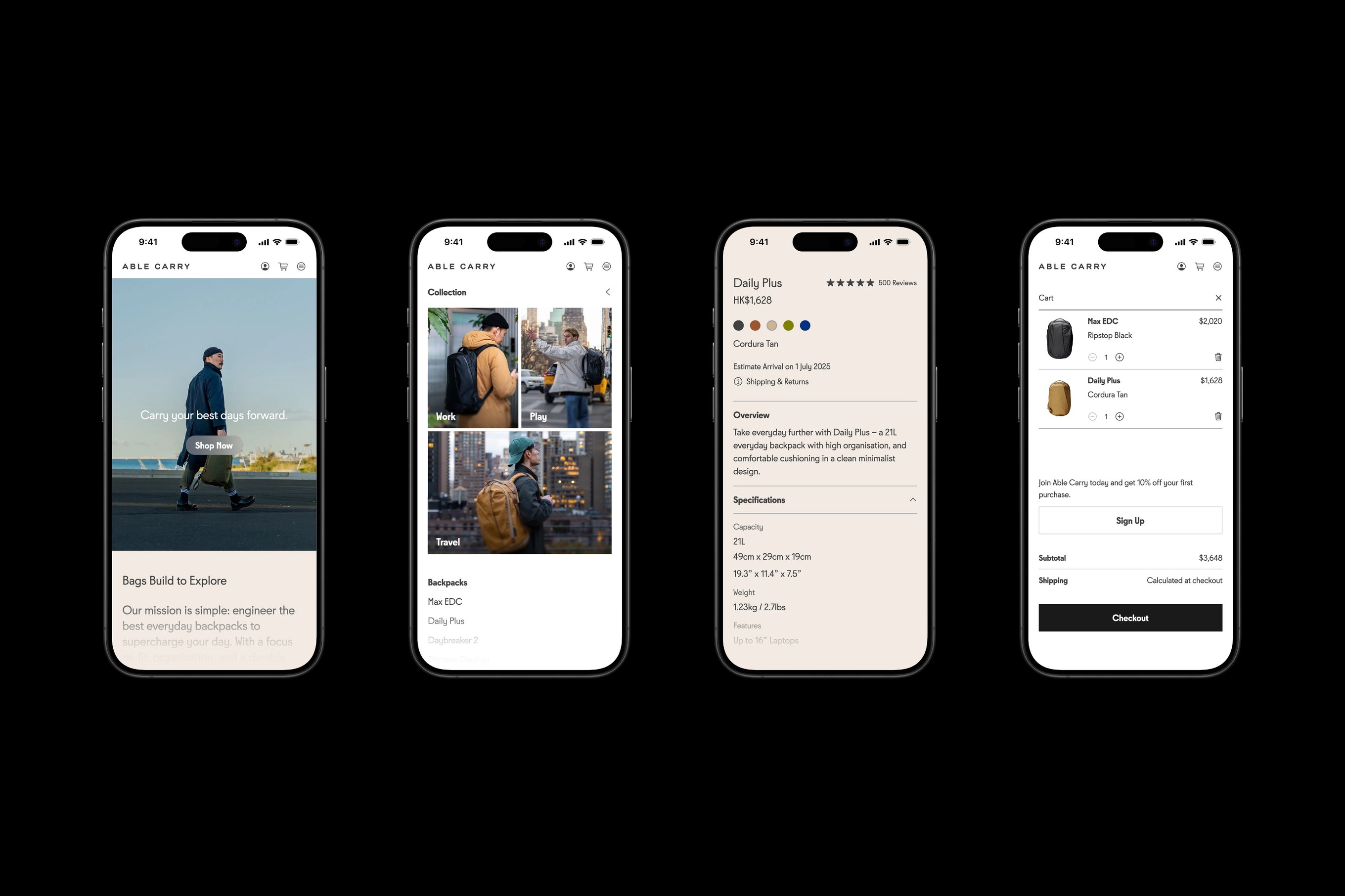
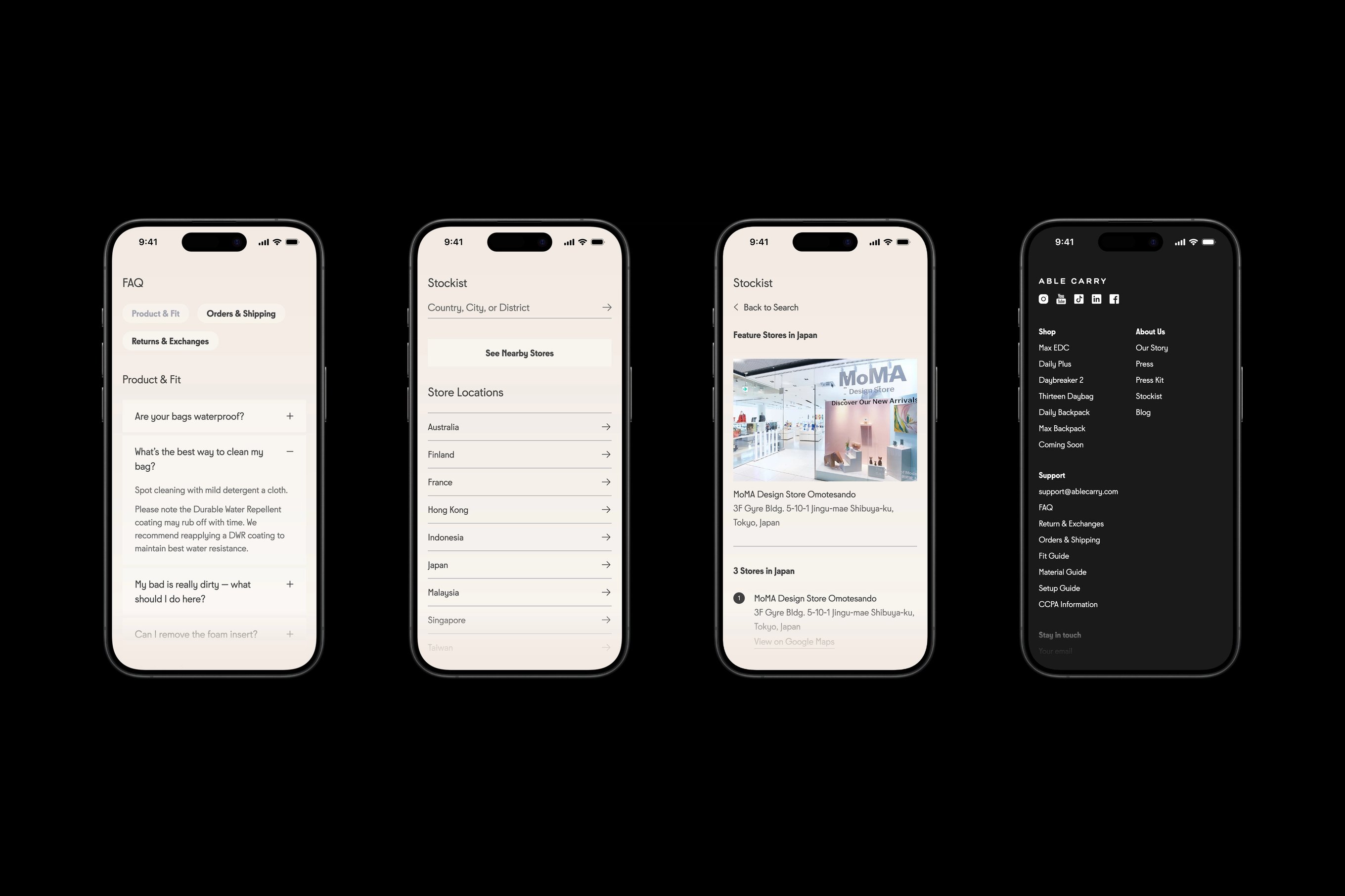
To weave a visual narrative faithful to Able Carry's ethos, we created a suite of dynamic content components that balance story, sales, and customer support.
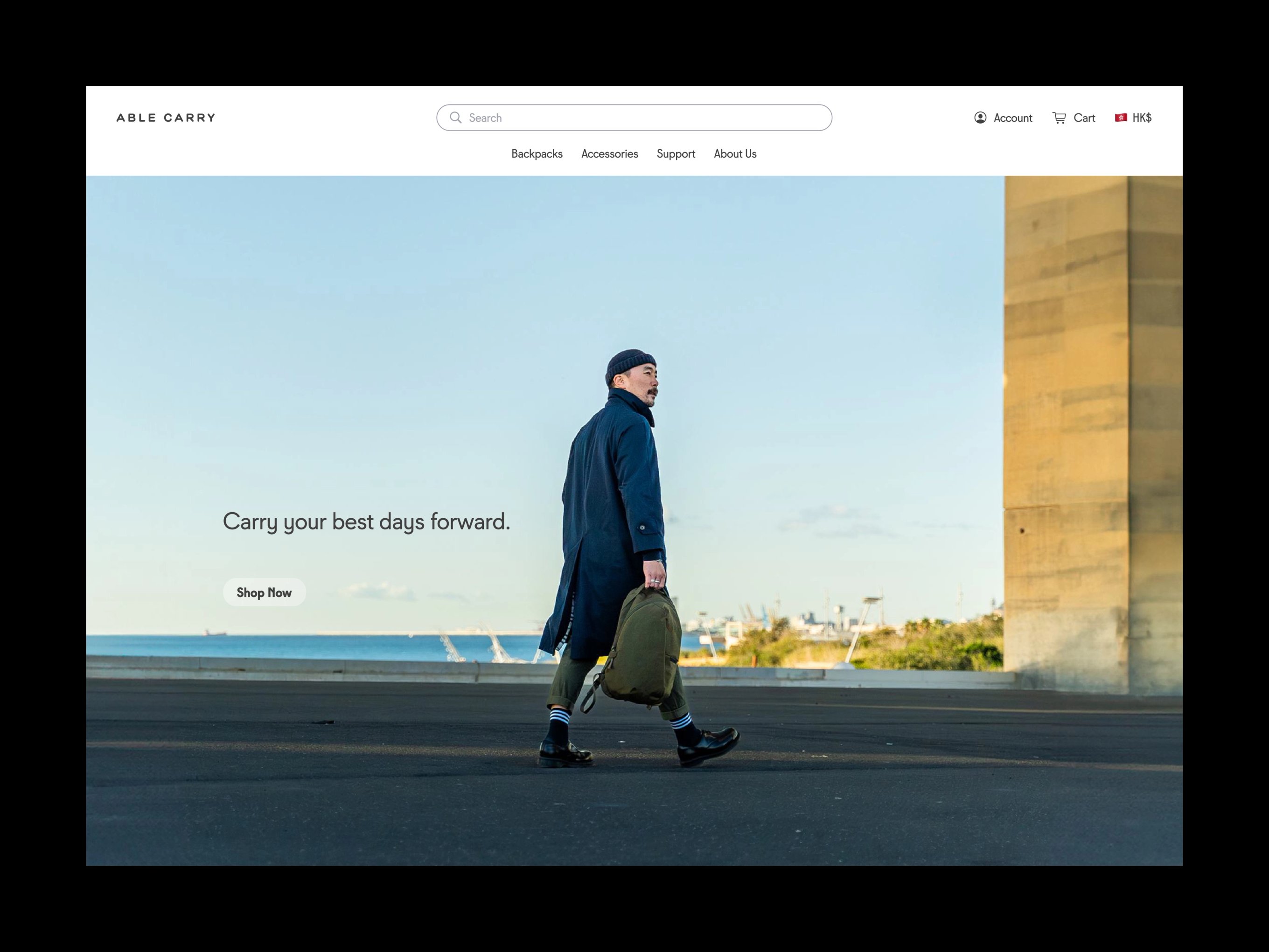
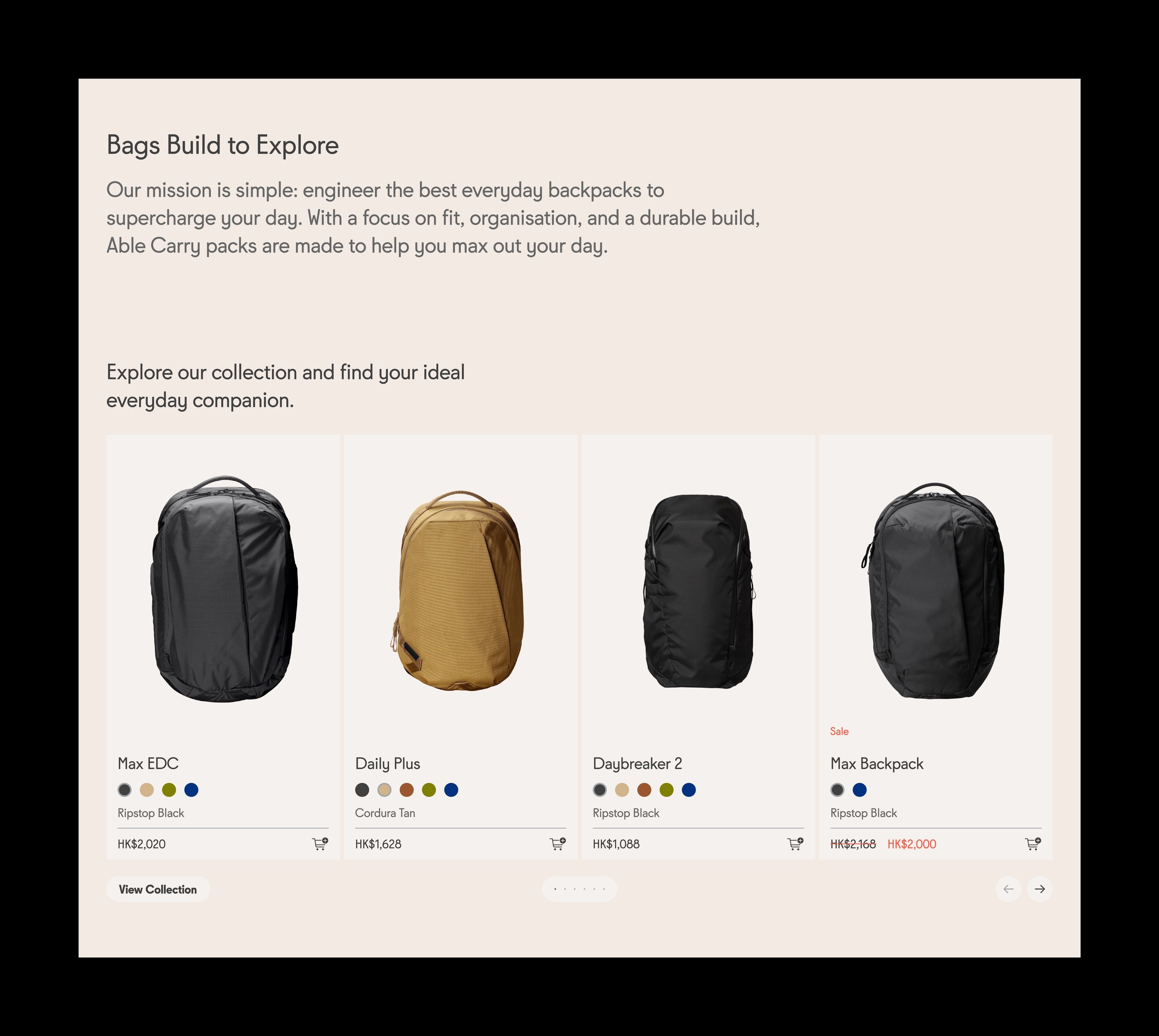
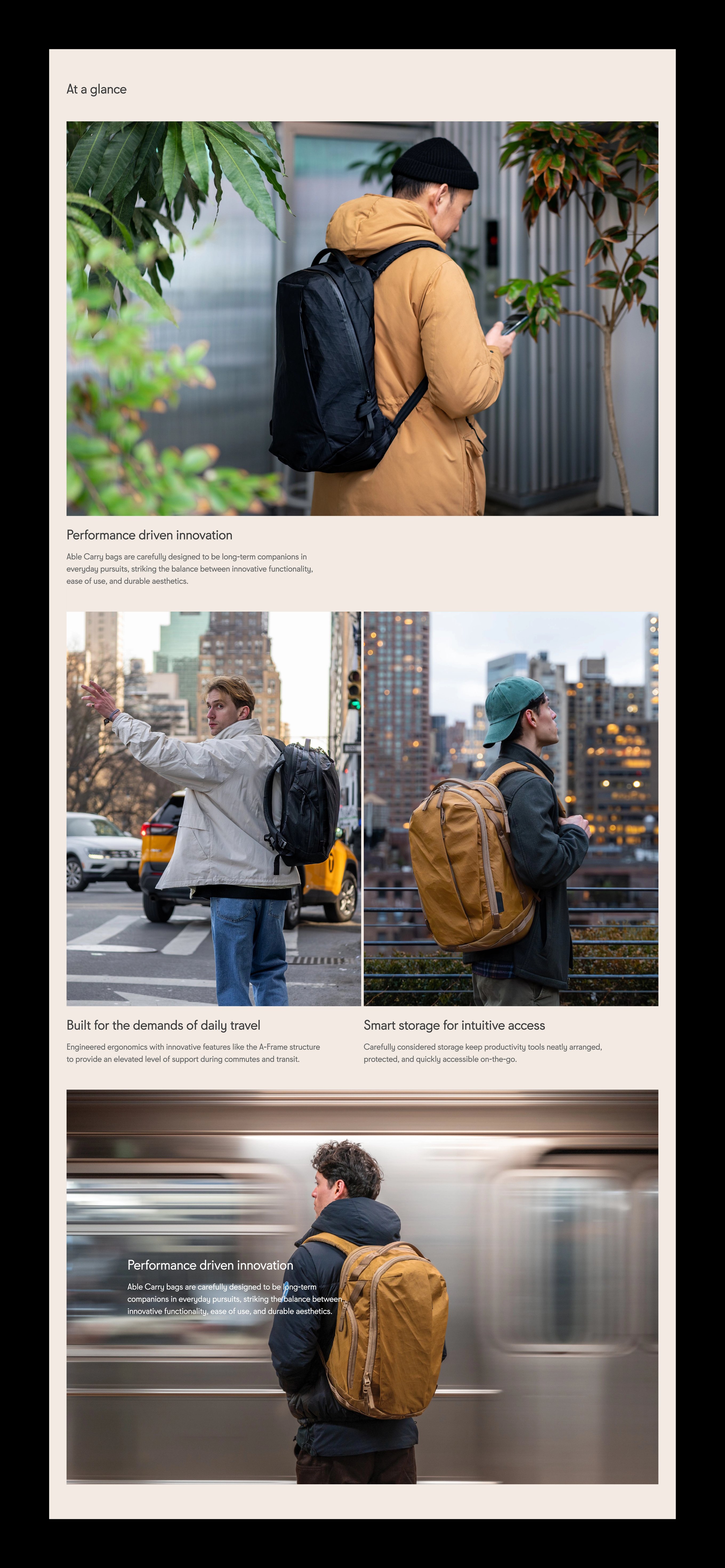
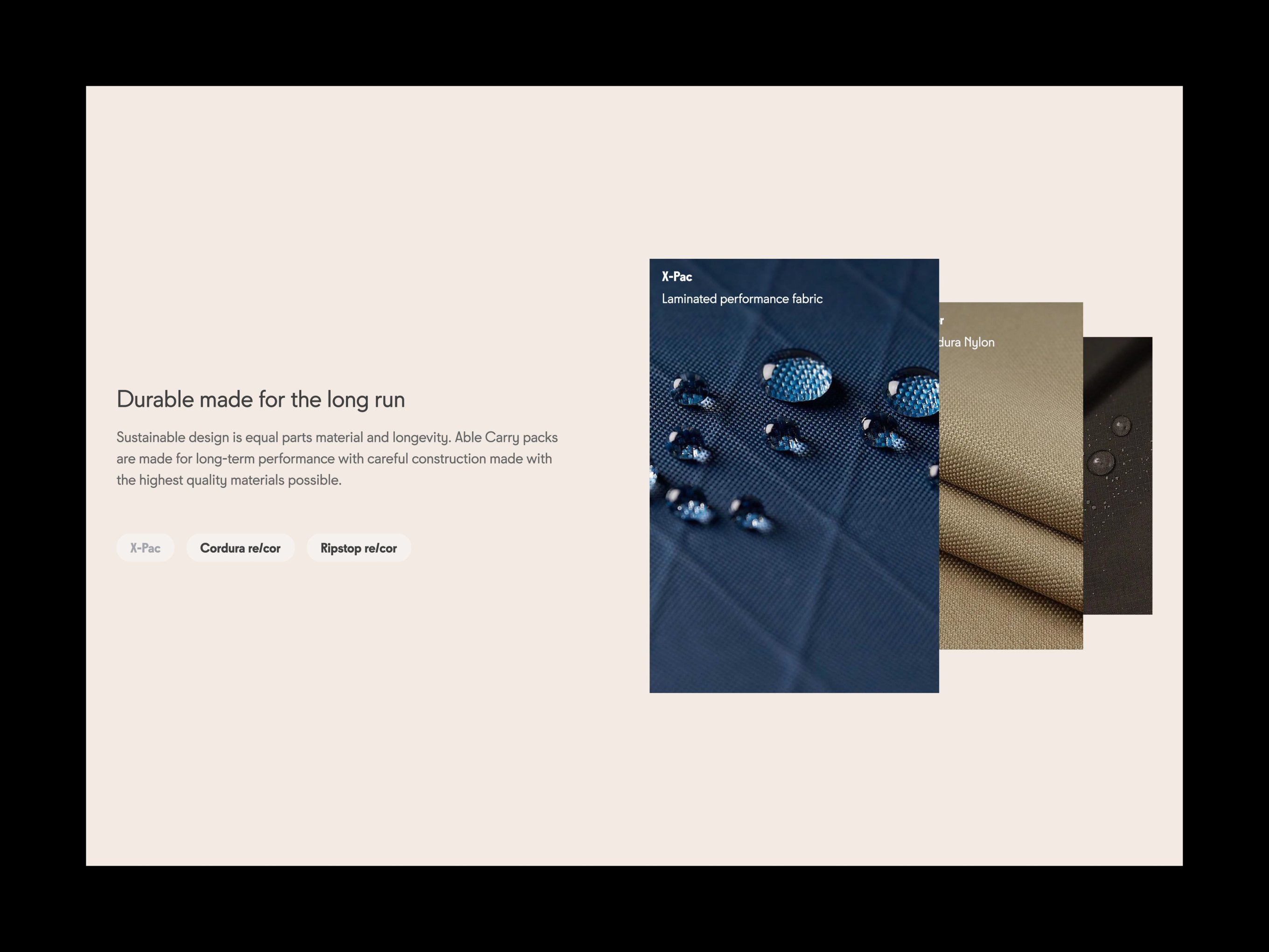
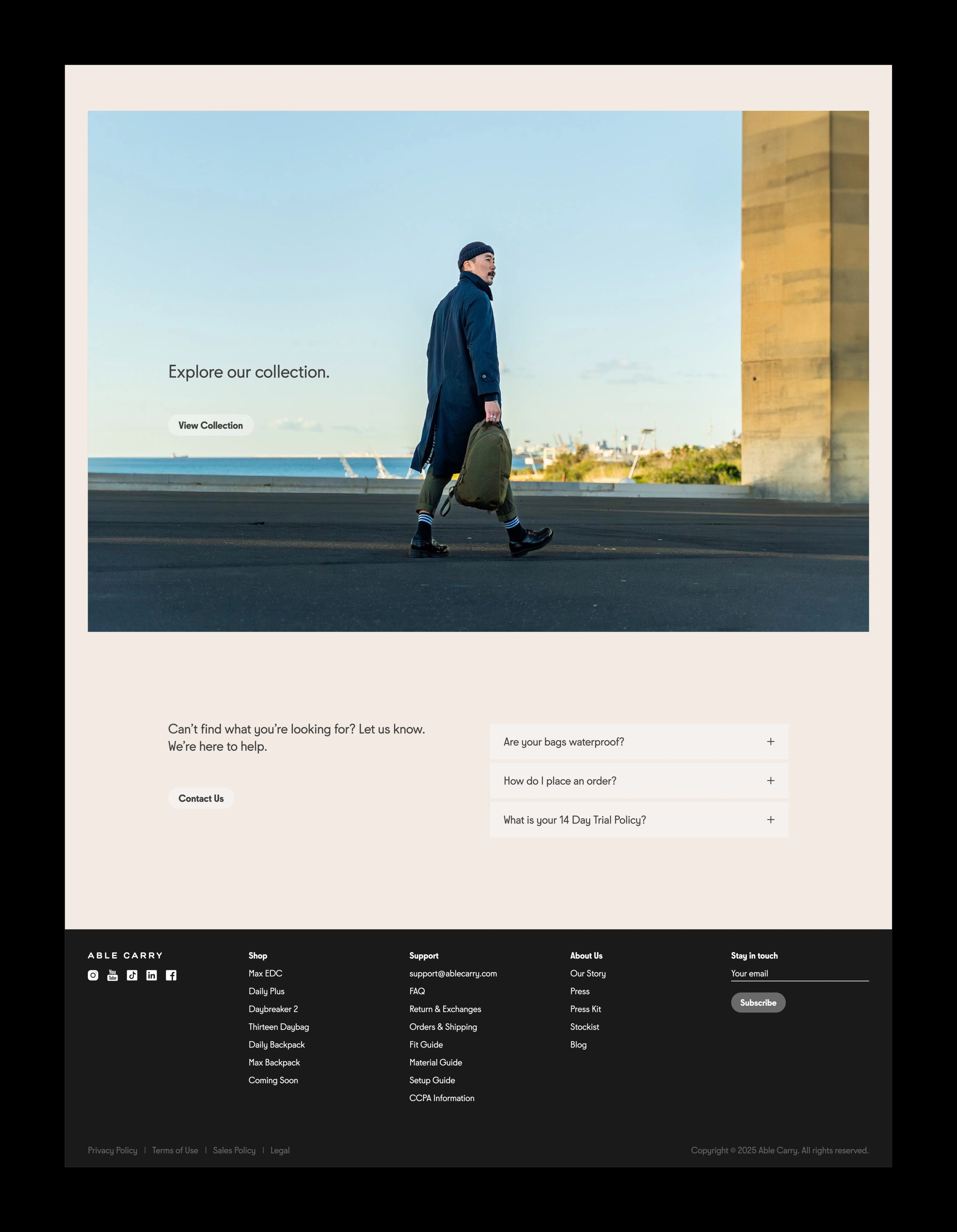
Lead Brand Designer Judy Chen of Able Carry oversaw our application of branded assets, including logos, fonts, colours, user interface, and all visual elements.
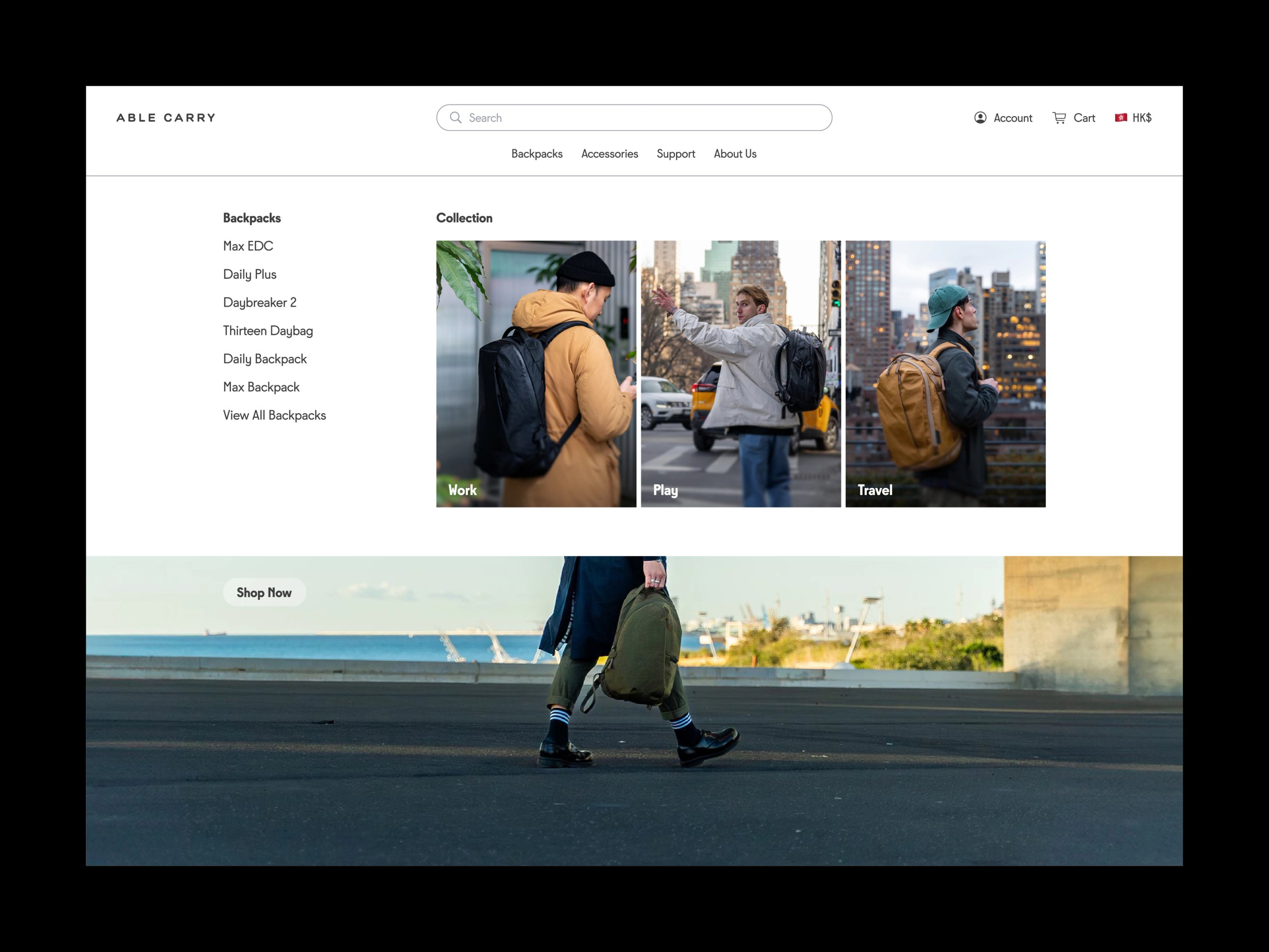
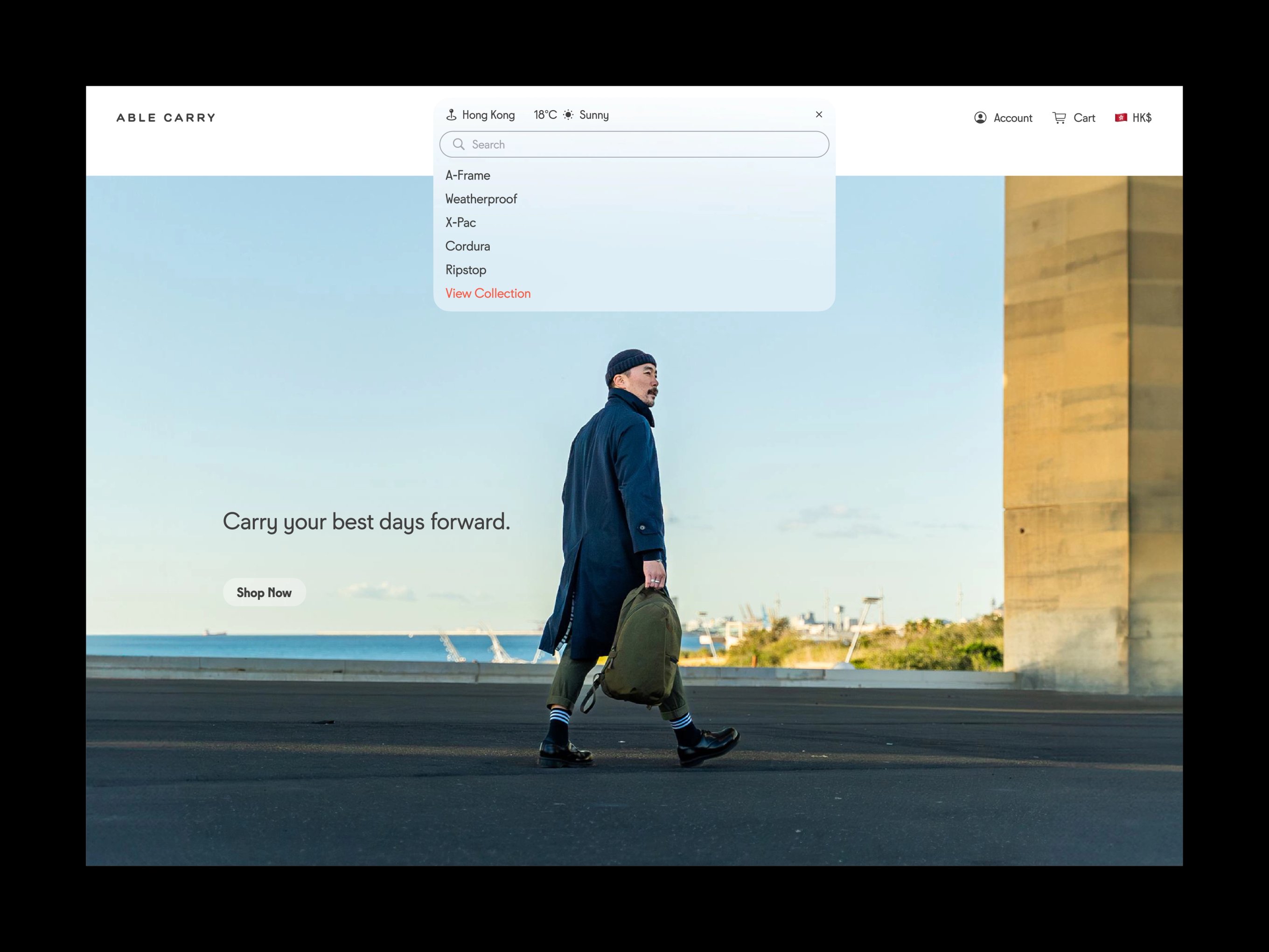
User interface components, such as an interactive menu and a search bar, can help declutter the website's content and visual elements, providing recommendations to streamline a user's choices.
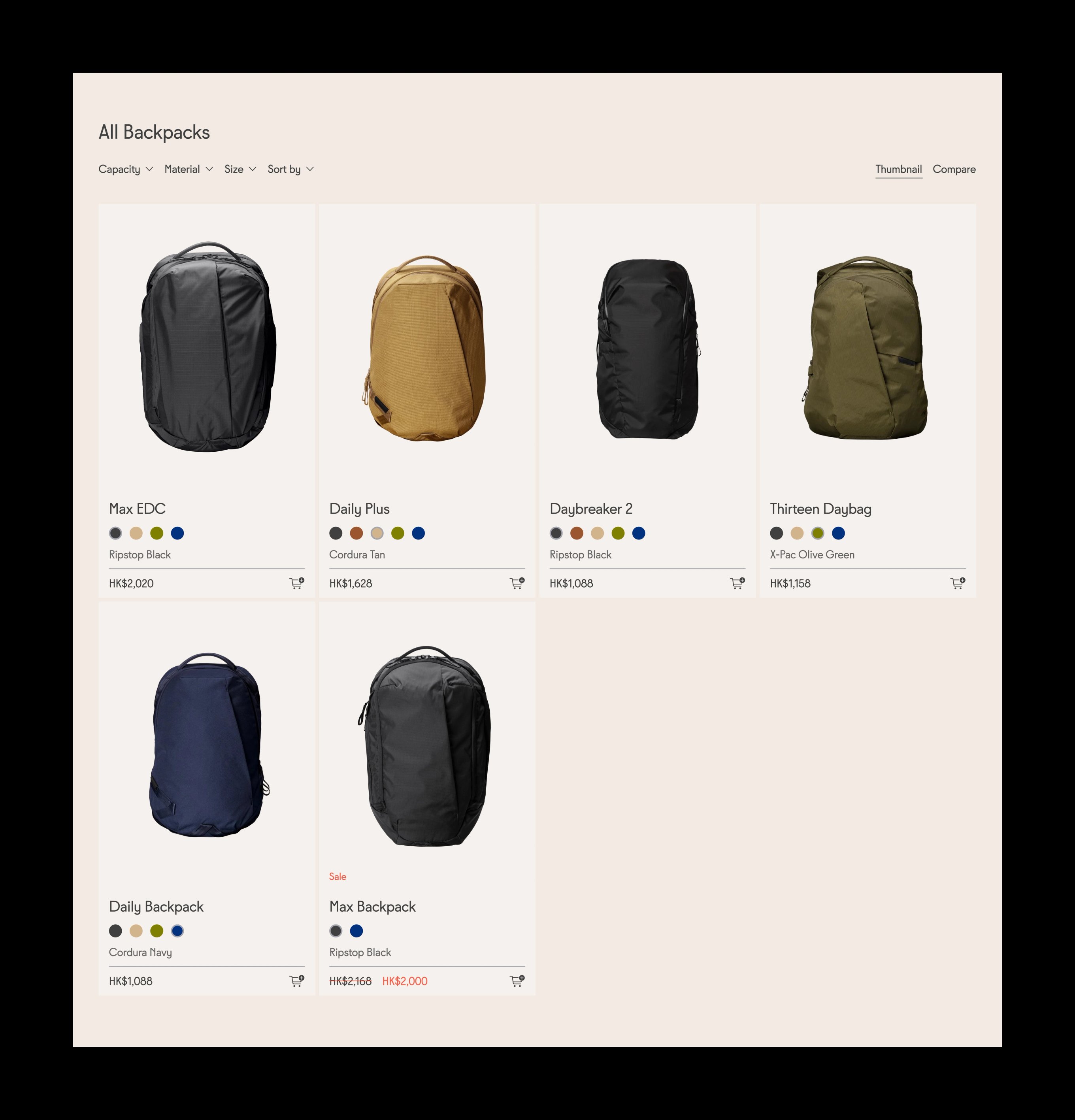
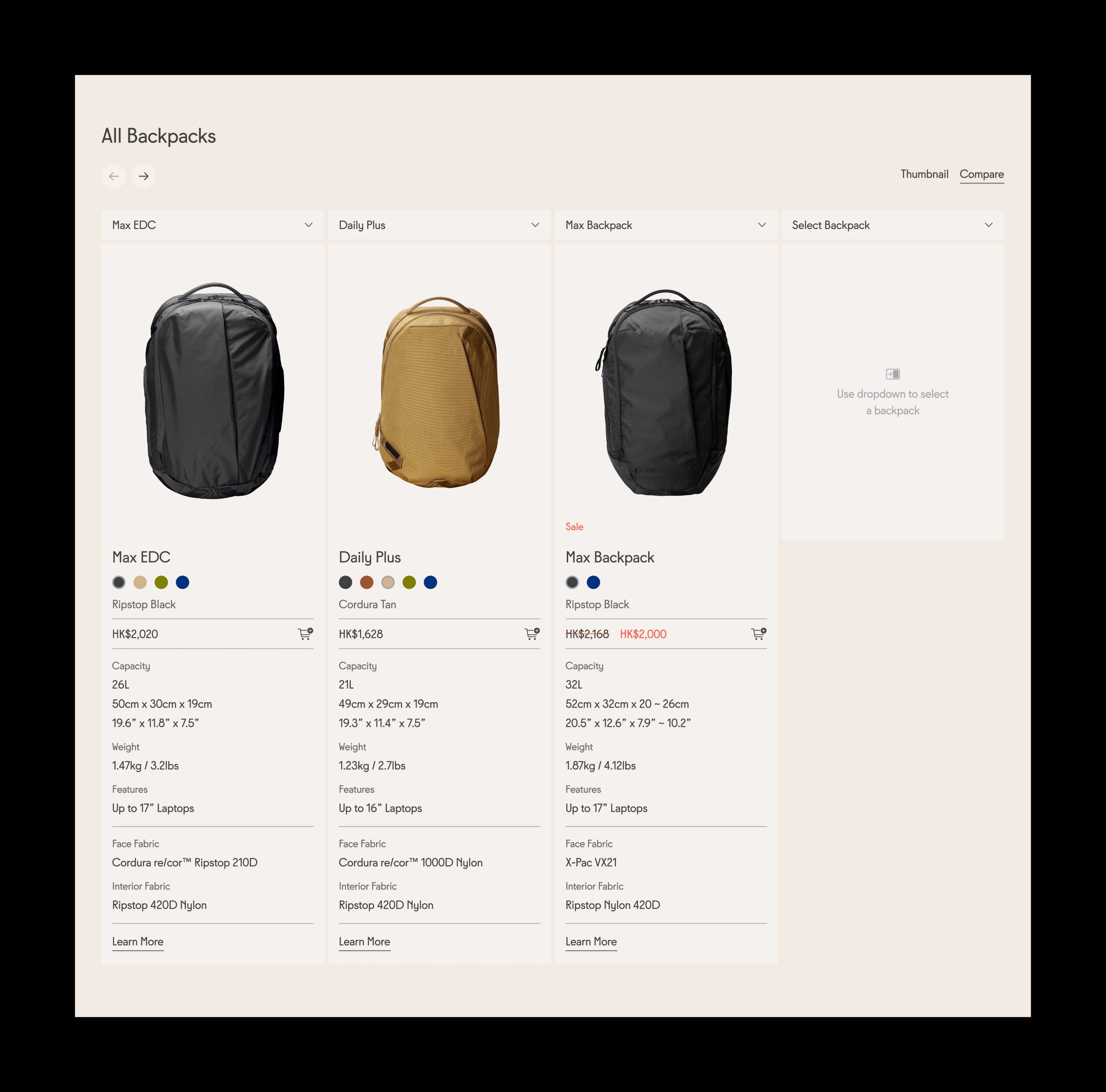
Visitors can toggle between two views on the "Backpacks" page: "Thumbnail" and "Compare".
Where the "Thumbnail" view delivers an overview of backpacks, the "Compare" view reveals backpack details and lets visitors compare several products simultaneously.
Our approach to designing the "Backpacks" page revolves around user-centricity, establishing multiple vantage points to help users make informed choices by decluttering unwanted content.
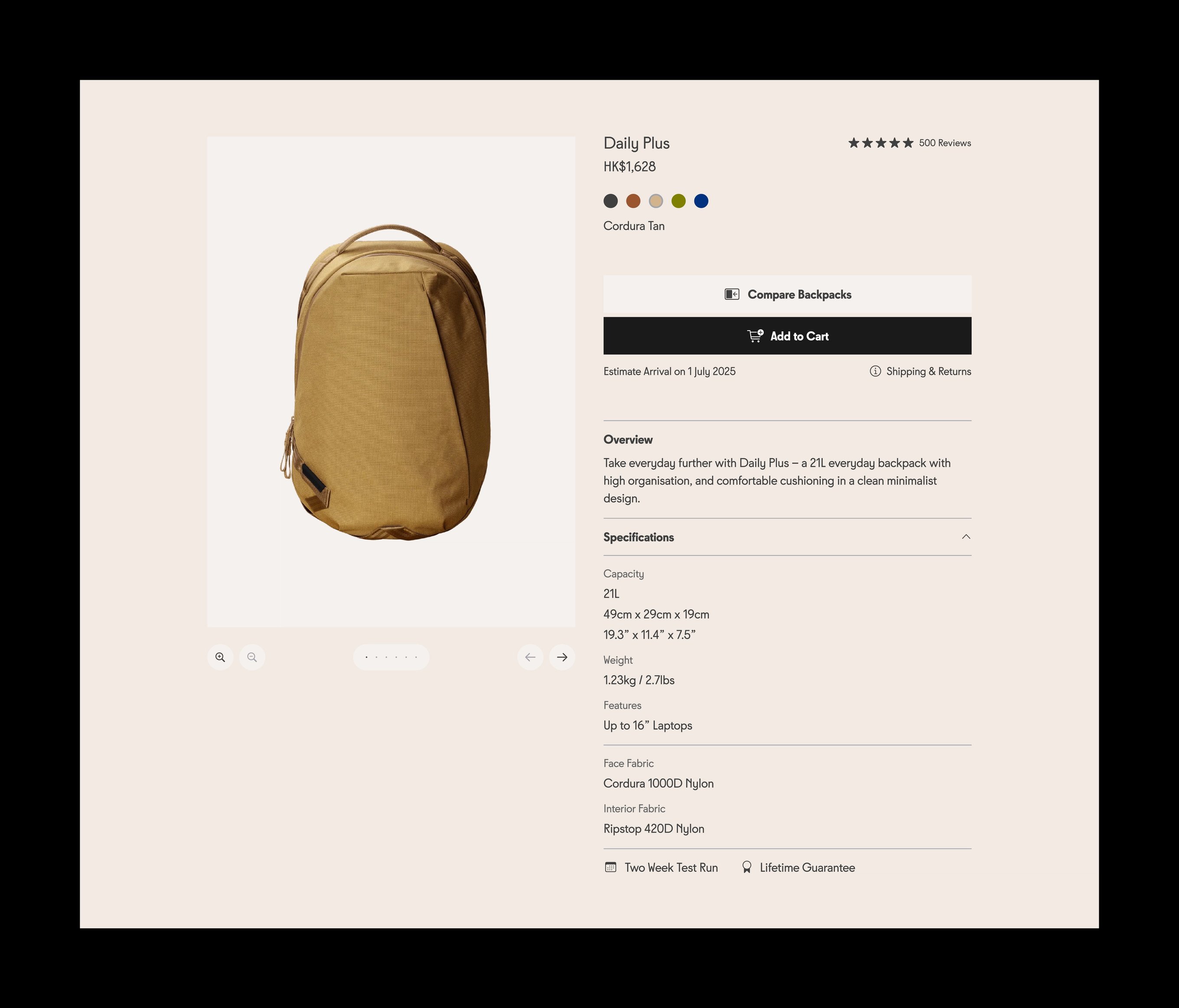
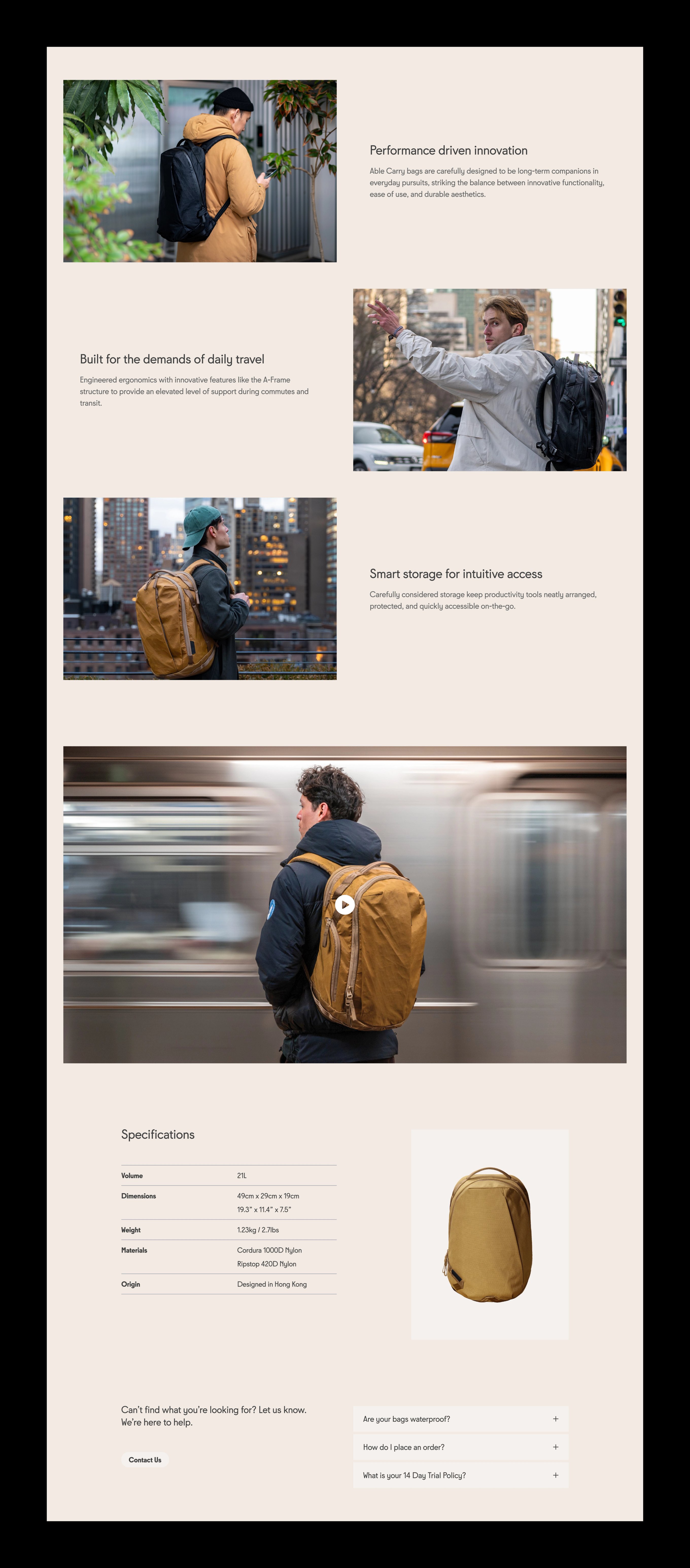
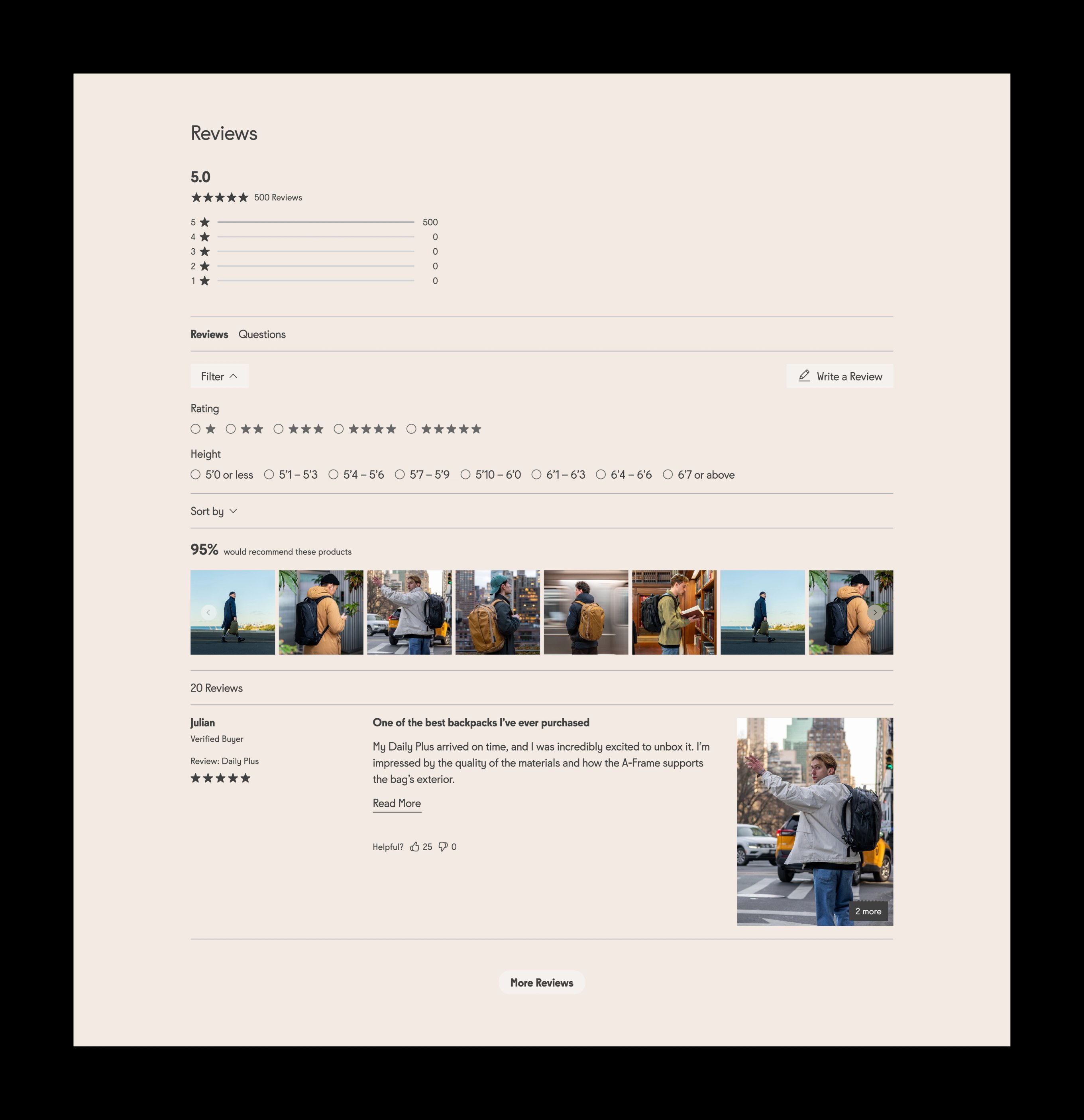
A product detail page consists of three sections: details, context, and reviews. A complete content structure tells a holistic story about the product, including product details, use conditions and context.
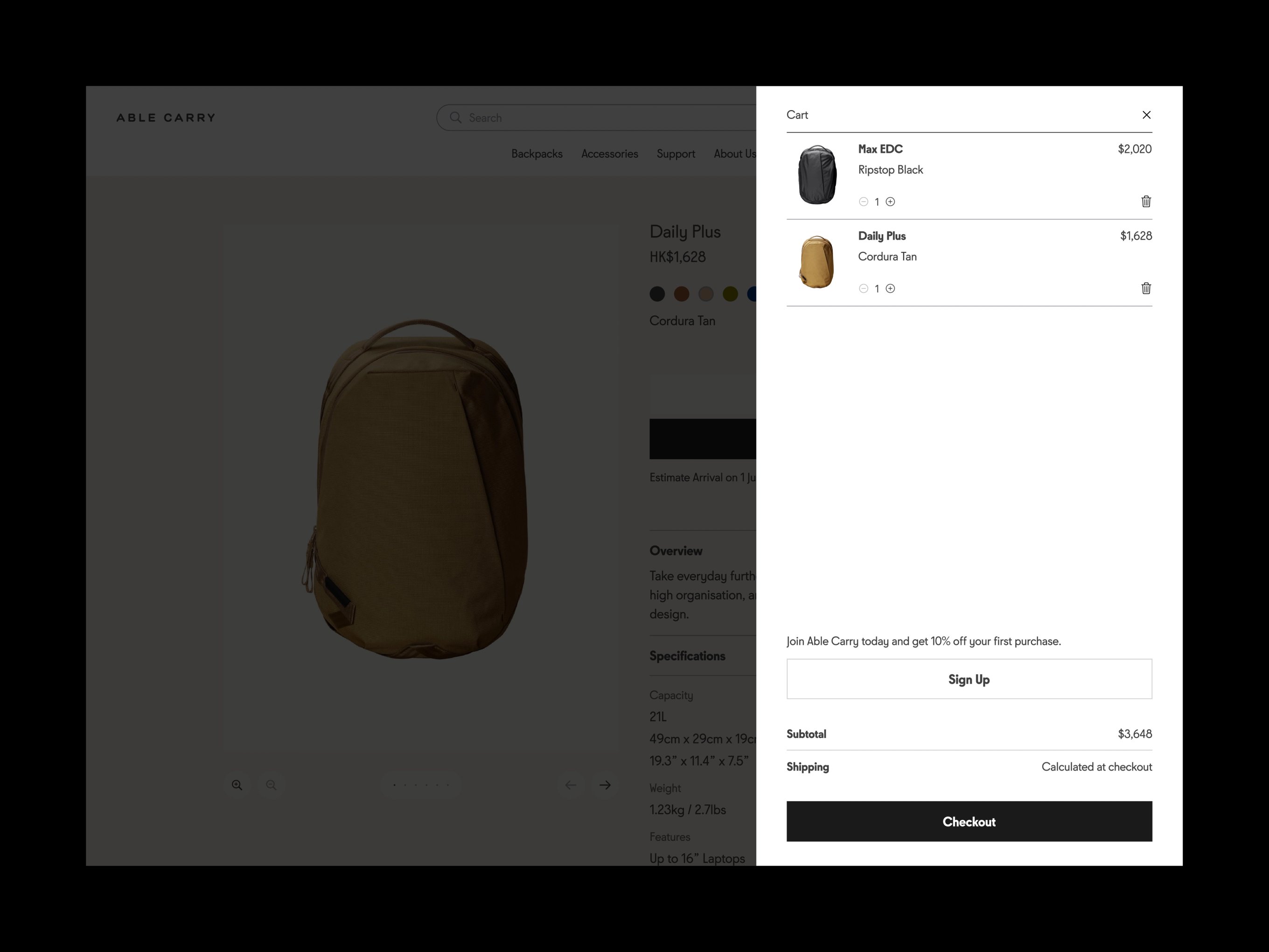
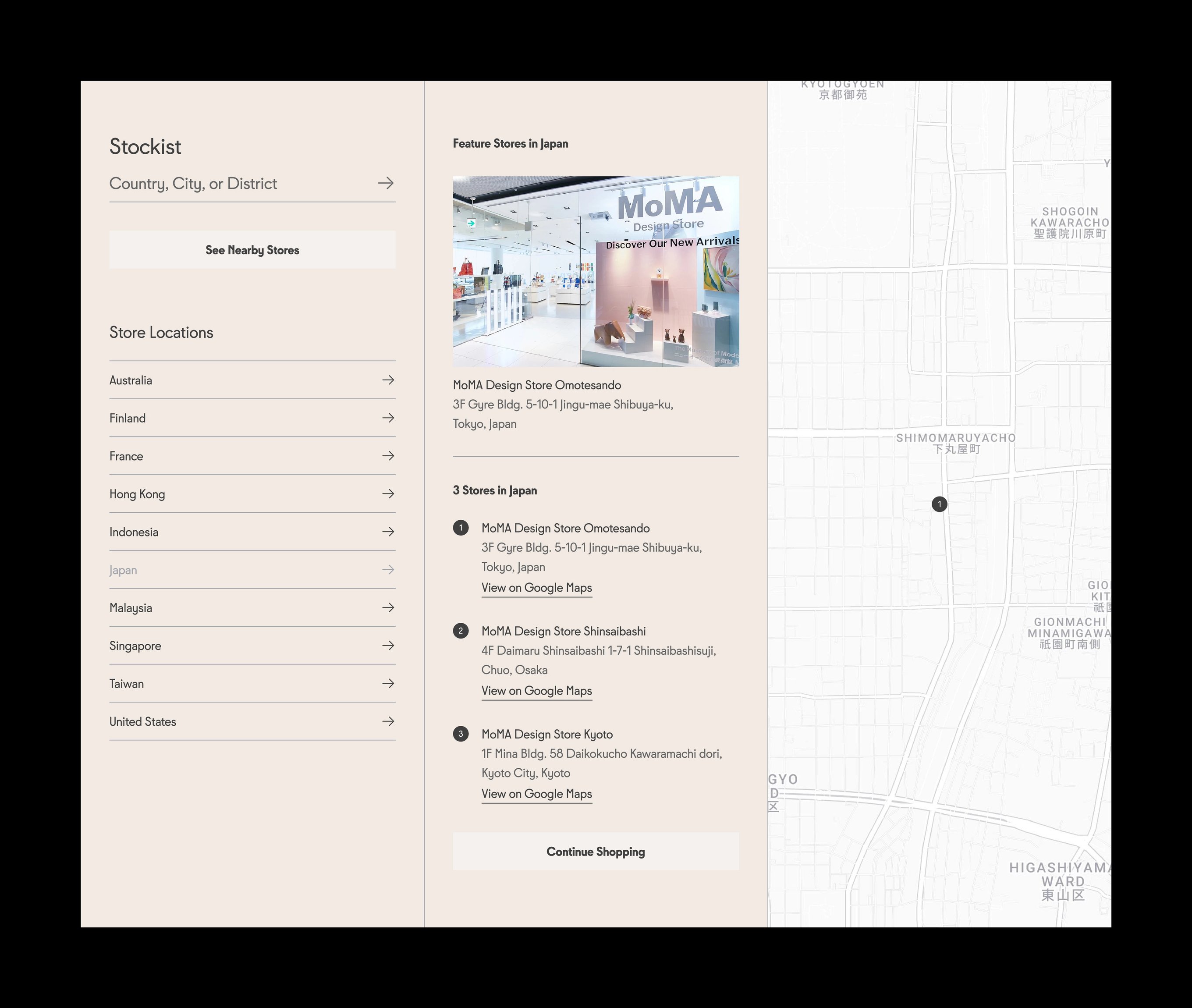
We established our approach based on service design principles. Our goal is to pave the way for a smoother user experience by prioritising users' desired outcomes and streamlining information delivery.
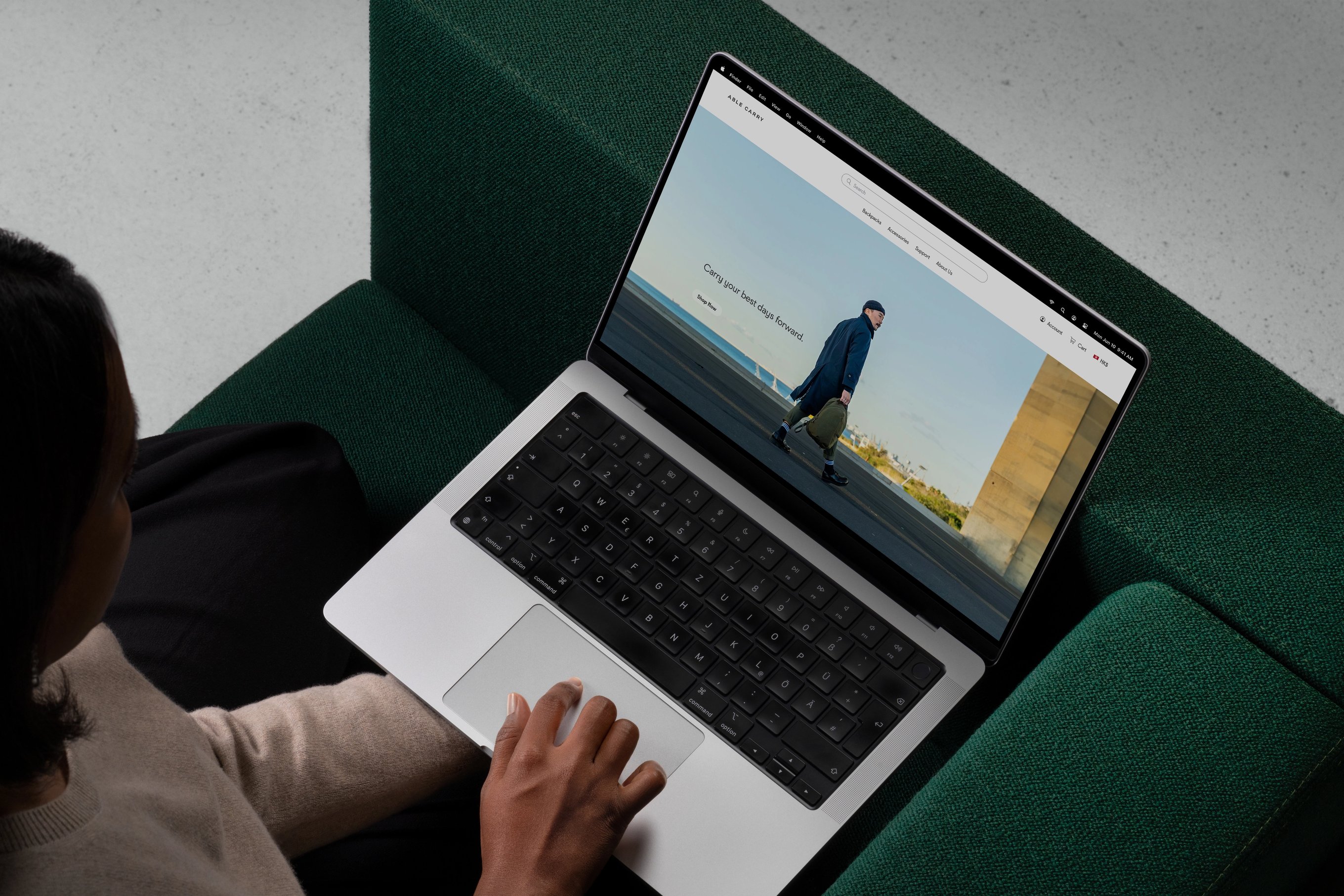
The Able Carry project was led by Jimmy K.K. Lam of Studio Earth, with Judy Chen of Able Carry and Will Wong on development.